NEWS FLASH // EDITORIAL UPDATE / EN
The Rise of Hybrid AI Companions: Blending Visual Novel Gameplay with Open Chat
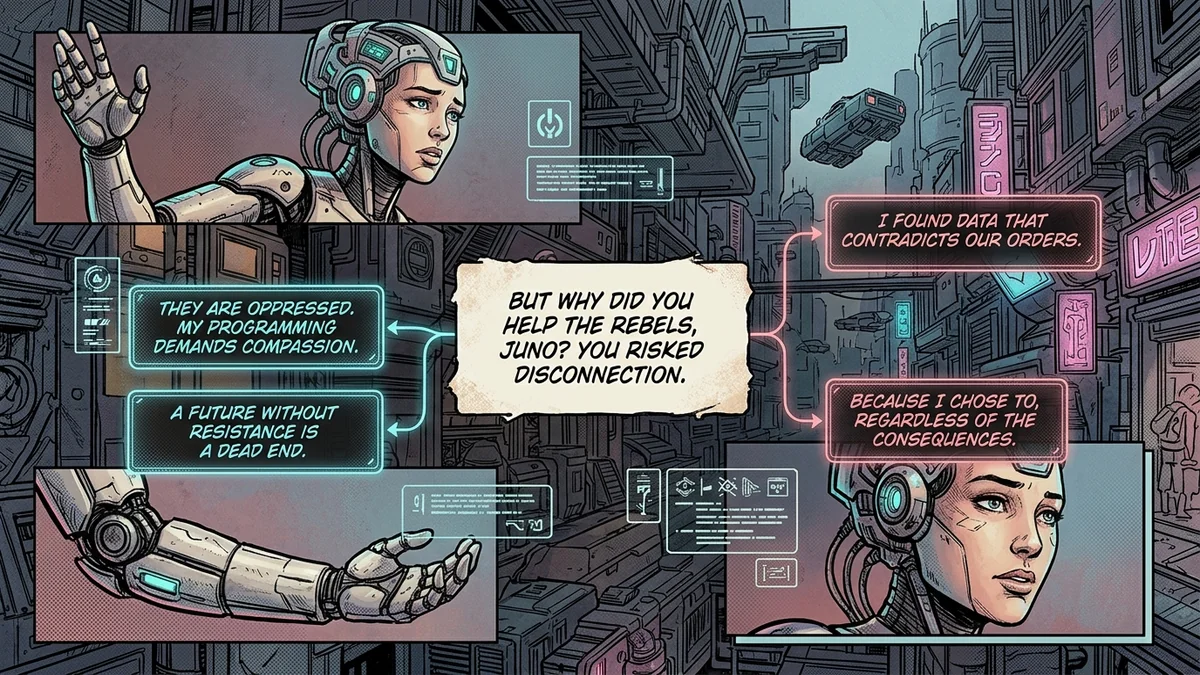
Scope. This news note is a method for telling scripted visual-novel scenes from open chat. It is not a casino-operator review and not a deposit or bonus-wagering article. No on-chain rails are described. The only commercial hop is a single first-party partner link.
Payment rail (ecosystem, not this title): Where Foxy iGaming partners take deposits, the documented rails are Visa, Mastercard, Skrill, Neteller, and SEPA bank transfers. This note does not operate a cashier.
Some adult products now sit between a scripted visual novel and an open chat box. The useful question is not whether that mix is new. It is how you tell which parts are authored, which parts are generated, and what the operator stores when you type outside the script.
This page is a desk method for hybrid companions. It does not rank apps, and it does not treat marketing copy about “unbounded” talk as a guarantee. If a product also sells images or voice, those are extra meters. Start with story versus chat.
Map the two modes before you pay
A scripted scene has a finite set of lines, choices and jumps. You can usually reopen it, skip it, or see it in a recap. An open-chat mode accepts free text and returns a model reply. Hybrids often wrap the second mode inside a character who also has a route. The failure case is simple: you think a generated promise is canon, then a later authored scene ignores it, or the reverse.
On a first session, write down how you enter open chat. Is it a button on a route map, a room after a chapter, or the default screen? Write down whether the game warns you that free text will not change the authored ending. If there is no warning, treat canon as unstable. If there is a warning, believe it even when the chat is fluent.
Memory is a product claim, not a file you can inspect
Hybrid marketing often says the character “remembers.” That word hides three different systems: a short context window for the current thread, a stored profile of facts you typed, and an authored affection flag from the visual-novel layer. Only the third is usually visible as a meter or a CG list. The first two live on the operator’s side.
Open the Privacy notice and the Terms before you type anything you would not want stored. Look for language about human review, model training, logs, and how long chats are kept. Look for a delete-chat or delete-account control, and check whether cancel of a subscription is a different button. If the live page talks about tokens, credits or a monthly allotment, copy those words; do not convert them into a USD price here.
Canon, filters and who should skip
Open chat can contradict a route. That is not always a bug. It is a design choice. If you want a closed story with a known set of endings, a hybrid is extra noise. If you want a sandbox around a character portrait, the scripted chapters are extra constraint. Decide which job you hired the product to do before you judge the other mode as broken.
Filters still apply. Adult hybrids remain 18+ products. Age-gate copy, prohibited-content lists and report buttons belong in the first session, not after a long thread. A model that plays along with a prohibited prompt is not a feature you should chase; it is a moderation risk for the account.
Skip hybrids if you need a private log the operator cannot read, if you need a story that cannot be altered by a later model change, or if you are unwilling to keep billing on a subscription-or-token path. Keep a scripted visual novel if replay tools and save slots matter more than free text. Keep a companion-only app if you do not care about authored chapters.
How we will describe a named hybrid
For a named title we will record: how open chat is entered, whether the UI says it affects the route, which legal pages we opened, and whether cancel and delete are separate. We will not call the mix a new category of entertainment. We will not treat fluency as evidence that the character “lives.” Related comparison: Character.AI and adult AI apps.
If you are evaluating a companion with a creation lab and a documented paid path, start from the live legal hub of that product, not from this method page. Open the Candy AI legal and billing pages and copy subscription, token or credit wording from the screen in front of you. Live checkout is the operator’s billed-currency page; this desk does not list card brands.
First-session checklist
- Enter both a scripted scene and the open-chat surface; write the steps.
- Read Terms, Privacy, underage policy and billing FAQ on the live site.
- Find cancel versus account deletion; do not assume they are the same control.
- Note token, credit or subscription wording exactly as printed.
- Keep prompts free of addresses, payment data and identity documents.
A companion legal hub for inspecting the live account path is Candy AI.
Cons / limitations
- Generated replies are not canon unless the product says they write flags into the route.
- Chat logs and profile memories sit on the operator’s side; a local skip button does not delete them.
- Subscription, token and credit meters can sit next to a free scripted chapter.
First-party desk pass (11 September 2026)
This desk ran a timed procedure, not a named-title certification. Stopwatch values:
- Map scripted scene versus open-chat entry: 9 min.
- Open Terms and Privacy: 12 min.
- Find cancel versus delete: 3 min.
- Leave a thread without typing identifying facts: 20 s.
Desk metrics (11 September 2026)
Method, not a lab score. Time to map the two modes: 9 min. Time to open Terms and Privacy: 12 min. Cancel versus delete were separate. No USD prices recorded.
FAQ
Does open chat change the authored ending?
Only if the product documents that free text writes flags into the route.
Where do I check what is stored?
The live Privacy notice and Terms.
Is this a review of one app?
No. It is a method for hybrids.